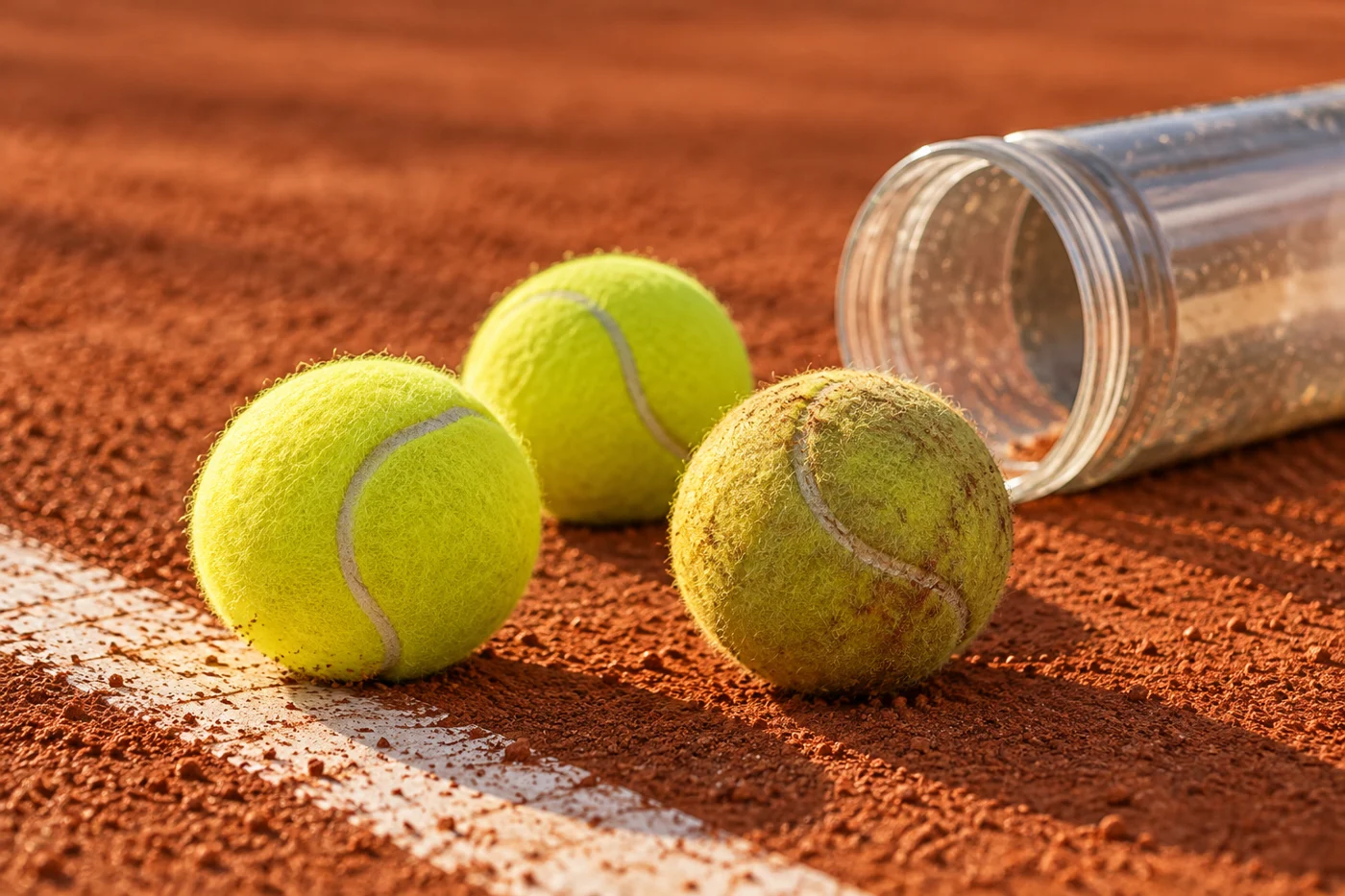
A tennis ball looks simple, but its bounce depends on several manufacturing stages working together. The rubber shell, internal pressure, felt and finishing process all contribute to the final result. The ITF’s manufacturing guide describes a process built around two moulded rubber half-shells rather than a solid sphere covered in fabric.
1. Prepare and mould the rubber
Manufacturers mix a rubber compound and form it into half-shells. Consistency matters: large variations in the shell can affect how a ball deforms and returns to shape. The raw material is not made into a finished solid ball and then cut into small cubes.
The exact formulation and factory machinery vary. A general manufacturing explanation should separate the essential stages from a particular company’s recipe.
2. Join the half-shells
The two halves are joined to create a hollow core. For pressurised balls, air or gas is retained at elevated pressure as the core is sealed. Pressureless balls also have a hollow rubber shell; they rely more heavily on the properties of the rubber rather than a large pressure difference.
This is why a pressureless ball should not be described as having a solid rubber core. Both types can wear, even though they lose their preferred playing response in different ways.
3. Add the felt covering
The covering is cut into two shaped panels, often compared to dog bones. Adhesive and heat help bond the material to the core. The visible curved seam is produced by the meeting edges of these panels.
Felt contributes to the way a ball interacts with the air and court. It is more than decoration, and its condition is one reason a well-used ball can play differently even when it still bounces.
4. Finish and inspect the ball
Further processing finishes the surface and prepares balls for inspection and branding. The ITF tests balls against specified performance requirements, including dimensions, mass, rebound and deformation. Approval applies to a particular ball model and approval period.
An approved model is not a promise that every worn ball will remain suitable indefinitely. Manufacturing tests and the condition of the balls in your bag answer different questions.
Why pressurised balls come in sealed cans
Pressure can gradually be lost from a pressurised ball. A sealed pressurised container helps protect its condition before opening. Opening the can starts a different storage situation; putting the lid back on a normal can does not restore factory pressure.
After play, compare bounce and feel across the whole set. Replace inconsistent balls together rather than mixing one fresh ball with several tired ones in a competitive match.
What this means when buying balls
Choose the type appropriate to your competition, surface and intended use. A training basket and a league match may call for different priorities. Consult the tennis ball questions guide for selection, storage and replacement, and the ball-brand guide for how to read product names.
