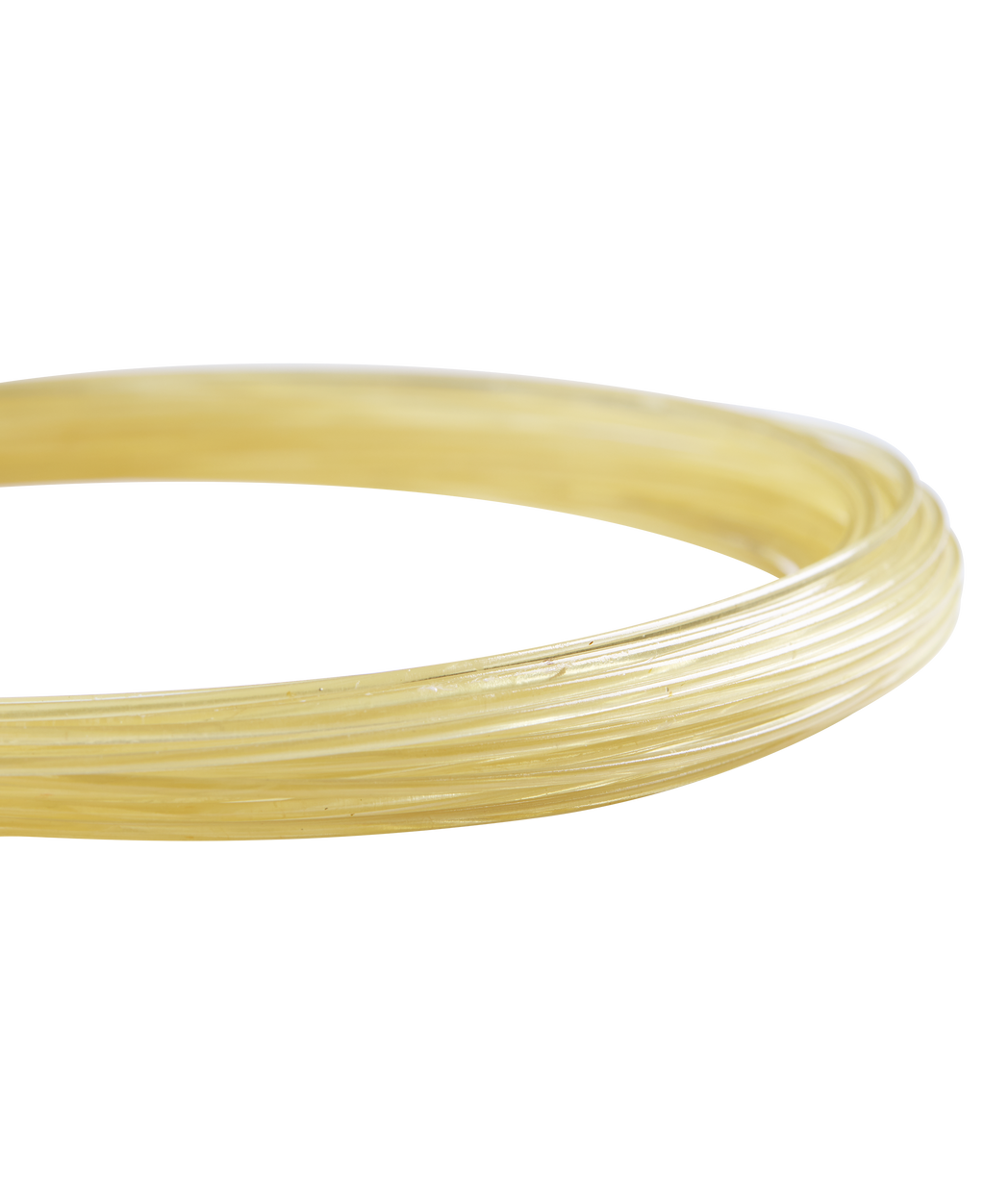
Luxilon Natural Gut is an animal-derived tennis string designed around elasticity, touch and tension maintenance. It can be used as a full string bed or combined with a different string in a hybrid. This is a product overview based on manufacturer information, not a claim that we have independently play-tested or scored it.
Natural gut and Luxilon polyester are different materials
Luxilon is closely associated with polyester strings, but its natural gut is a separate material category. The name on the packet does not make all strings in the range behave alike. Natural gut is an elastic fibre-based construction; polyester is usually selected for a firmer, lower-powered response.
A hybrid combines the two categories. The result depends on which string is installed in the mains and which in the crosses, as well as the frame, diameter and tension. “Hybrid” is a stringing arrangement, not a different species of natural gut.
Read the diameter correctly
Wilson’s Luxilon listings include 1.25 mm and 1.30 mm Natural Gut products. Those measurements are diameters in millimetres. They are not 125 mm or 130 mm, which would be far larger than a tennis string.
Use the precise millimetre measurement when comparing packets, because gauge labels can differ across brands. Available versions and prices can change by country and retailer, so check the specific product rather than relying on an old price quoted in a guide.
Full bed or hybrid?
A full bed keeps the string material consistent throughout the racket. A hybrid can combine natural gut with a firmer string, potentially changing the response and the way the strings move and wear. Neither arrangement is automatically superior.
If you like your current setup, record it before experimenting. A stringer can help choose a starting tension within the applicable recommendations. Changing the string, tension and racket simultaneously makes the result much harder to interpret.
What to consider before buying
Start with your string-breaking history. A player who gets many sessions from a set may assess its cost differently from someone who breaks strings frequently. Also consider moisture exposure, storage habits and whether an animal-derived product suits your preferences.
No score out of 100 is provided here because there is no documented Tennis Baselines test behind such a number. Manufacturer descriptions are useful for construction and intended positioning; they do not establish how the string will feel in your particular racket.
Care and comfort
Protect the racket from heat and unnecessary moisture. Check the grommets and avoid continuing with damaged string supports that can create premature breakage. Modern coatings assist protection but are not a reason to leave a racket wet.
An elastic string can be part of a comfort-oriented equipment choice, but it is not medical treatment. If discomfort persists, seek individual advice and consider technique and playing load as well as equipment.
Compare the alternatives
Read the natural gut material guide before deciding on a brand. The broader string guide compares natural gut, multifilament, synthetic gut and polyester so the purchase follows a playing need rather than a logo.
