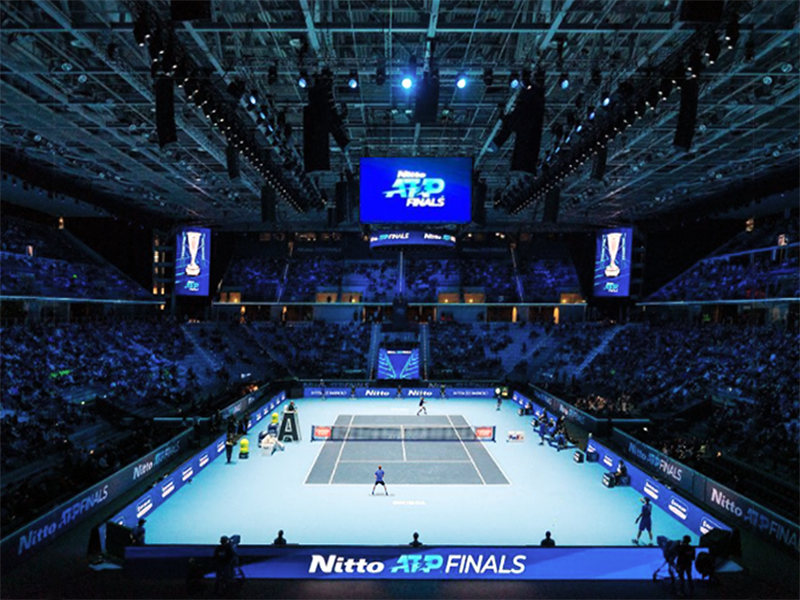
The ATP Finals bring a small field of leading men’s singles players and doubles teams together for the tour’s season-ending championship. If you know the event as the Masters final, this is the competition you are looking for. Its group stage makes it very different from a normal knockout tournament.
Is the ATP Finals a Masters 1000?
No. The season finale is a separate event from the nine ATP Masters 1000 tournaments. The similar historical language can cause confusion, but winning a Masters 1000 event and qualifying for the ATP Finals are different achievements.
The singles competition has eight players, with eight teams in the doubles field. Qualification is based on the season’s results under the ATP’s eligibility rules. The season Race and the rolling rankings answer different questions; use the official qualification list rather than assuming every ranking table is the entry list.
How the groups work
The singles players are divided into two groups of four. Each faces the other three members of the group. The leading two in each group reach the semi-finals, where a group winner meets the other group’s runner-up. The semi-final winners contest the final.
This means an early defeat need not end a player’s tournament. It also means a 2–1 record cannot always be understood without the complete table and applicable tie-break criteria. Check official standings when players finish level, particularly if withdrawals or incomplete matches complicate the group.
Scoring and ranking points
Singles matches use the best of three tie-break sets, including the final. Doubles uses its own shortened scoring arrangements, including no-ad scoring and a match tie-break in place of a third set. Do not assume a doubles scoreline represents the same format as singles.
An undefeated singles champion can earn 1,500 ranking points: 200 for each round-robin win, 400 for the semi-final and 500 for the final. A champion who lost a group match therefore does not collect the same total as an unbeaten champion.
What makes the tennis interesting?
A useful viewing exercise is to follow a player’s adjustment between group matches. Does the return position change? Is the second serve being attacked differently? Can a player recover after a poor opening performance? The format rewards the ability to respond within a short event.
In the semi-finals, the calculation changes. There is no later group match available to repair a loss. Compare the same player’s point selection in a group match and a knockout match, while remembering that opponent and conditions also influence the choices.
Plan your viewing or visit
Check the official draw, session allocation and current venue information before buying tickets. Turin hosts the 2026 edition, but an evergreen format guide is not a promise about future locations. A session ticket may not cover every match that day, and qualification does not guarantee a particular player will appear in your session.

