Jannik Sinner is a rewarding player to study when you want to understand how pressure can come from a sequence of solid shots. Instead of watching only the final winner, follow how the rally becomes progressively harder for the opponent to manage.
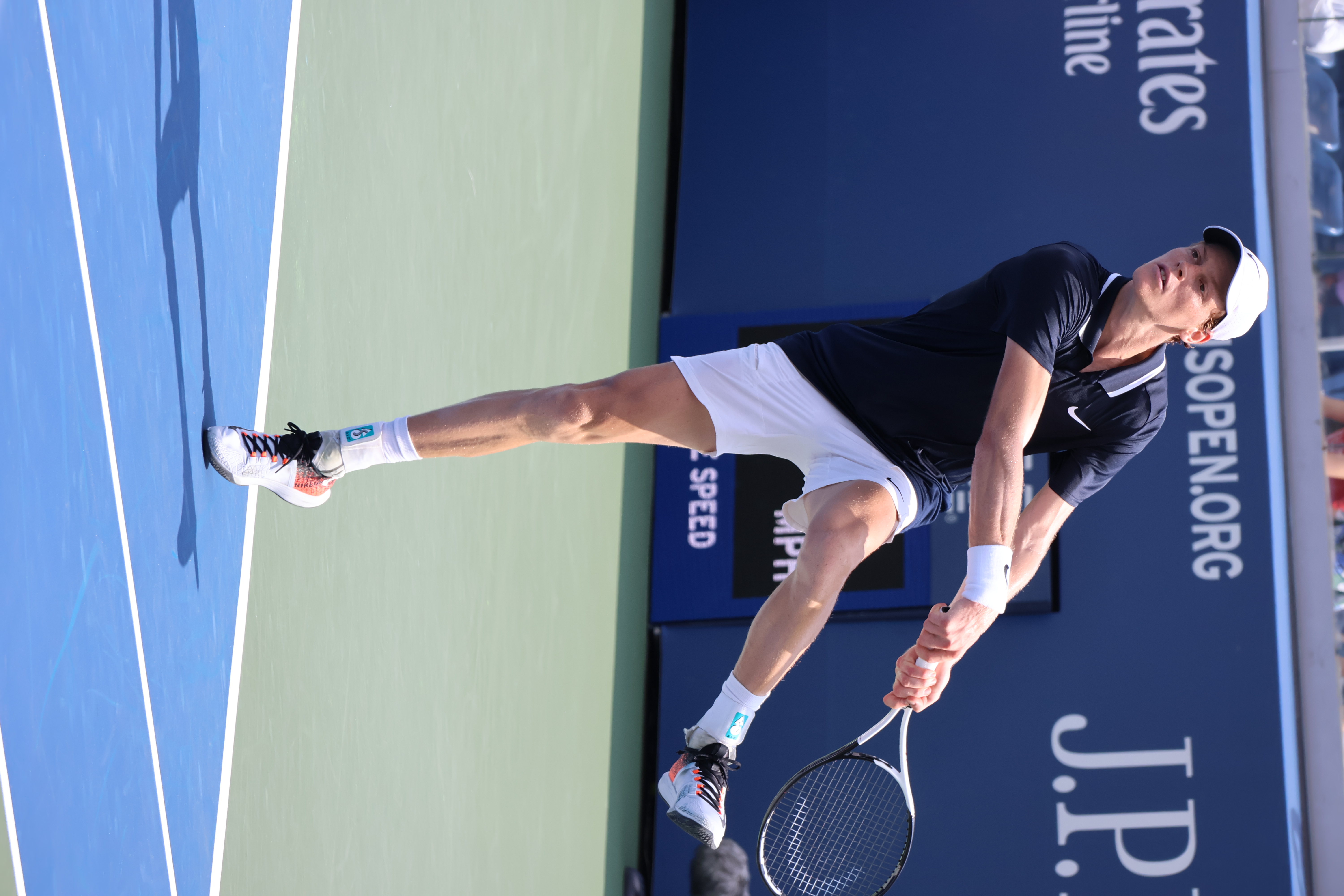
Selected milestones from his rise
Sinner won the Australian Open and US Open in 2024 and became the first Italian man to reach No. 1 in the ATP rankings. He also won the 2024 ATP Finals. These landmarks explain his place among the leading players of his era without treating this article as a live season report.
Use the official ATP record for current rankings and complete results. Here, the focus is the tennis itself: how to watch his baseline exchanges and identify ideas that can be adapted to ordinary practice.
Watch the contact position
During a neutral exchange, notice where Sinner meets the ball relative to the baseline and his body. Then watch how that affects the opponent’s recovery time. Taking time away is not only a matter of raw ball speed; court position and a compact preparation can also influence the exchange.
This is an observation exercise, not a claim that every Sinner shot is taken early. He still has to adjust when the incoming ball is high, deep or wide. The interesting detail is how he changes the preparation to fit the available time.
The two-handed backhand in rally construction
Rather than counting backhand winners, follow the shots that prevent the opponent from controlling the point. A firm cross-court reply can maintain depth and preserve a good court position. A direction change becomes more useful when the incoming ball and balance make it available.
For a club player, the first task is a dependable cross-court backhand. Practise a target with enough margin from both lines. Add the down-the-line option only when you can recover appropriately and recognise the increased demands of that choice.
Pressure through repeatability
Select a full game and ask which player repeatedly hits from a comfortable position. Look at depth, recovery and the next ball offered. A rally can be won through a succession of manageable decisions before a highlight-worthy stroke appears.
In practice, use a cooperative drill with a partner: maintain a cross-court rally, then allow a change only when one ball lands short. This encourages recognition and restraint. The aim is not to imitate professional pace but to make an attacking choice from a better position.
Build a useful viewing habit
Watch one return game without skipping between points. Track first returns in play, starting position and how the first neutral exchange develops. Write down observable patterns rather than assumptions about confidence or personality. Sinner’s matches are especially useful for learning to appreciate the work that makes a straightforward-looking winner possible.

