The United Cup combines men’s singles, women’s singles and mixed doubles in one national-team competition. It offers a different way to watch the start of the tennis season: a country’s result depends on contributions from both tours and, often, a mixed partnership.
What is a United Cup tie?
A tie is the meeting between two nations. The format used in 2026 contains one men’s singles match, one women’s singles match and one mixed doubles match. Winning two of those matches secures the team tie.
This gives mixed doubles a clear role in the competition. If the singles matches are split, the final result depends on the pair. Even where the team result is already established, group calculations and competition rules can still make the remaining scheduled match relevant.
Groups and knockout rounds
The 2026 competition has 18 countries, arranged in six groups of three for round-robin play. Teams then progress into the knockout phase under the published advancement rules. Read the complete group table when records are level; a simple count of tie wins may not explain every qualification outcome.
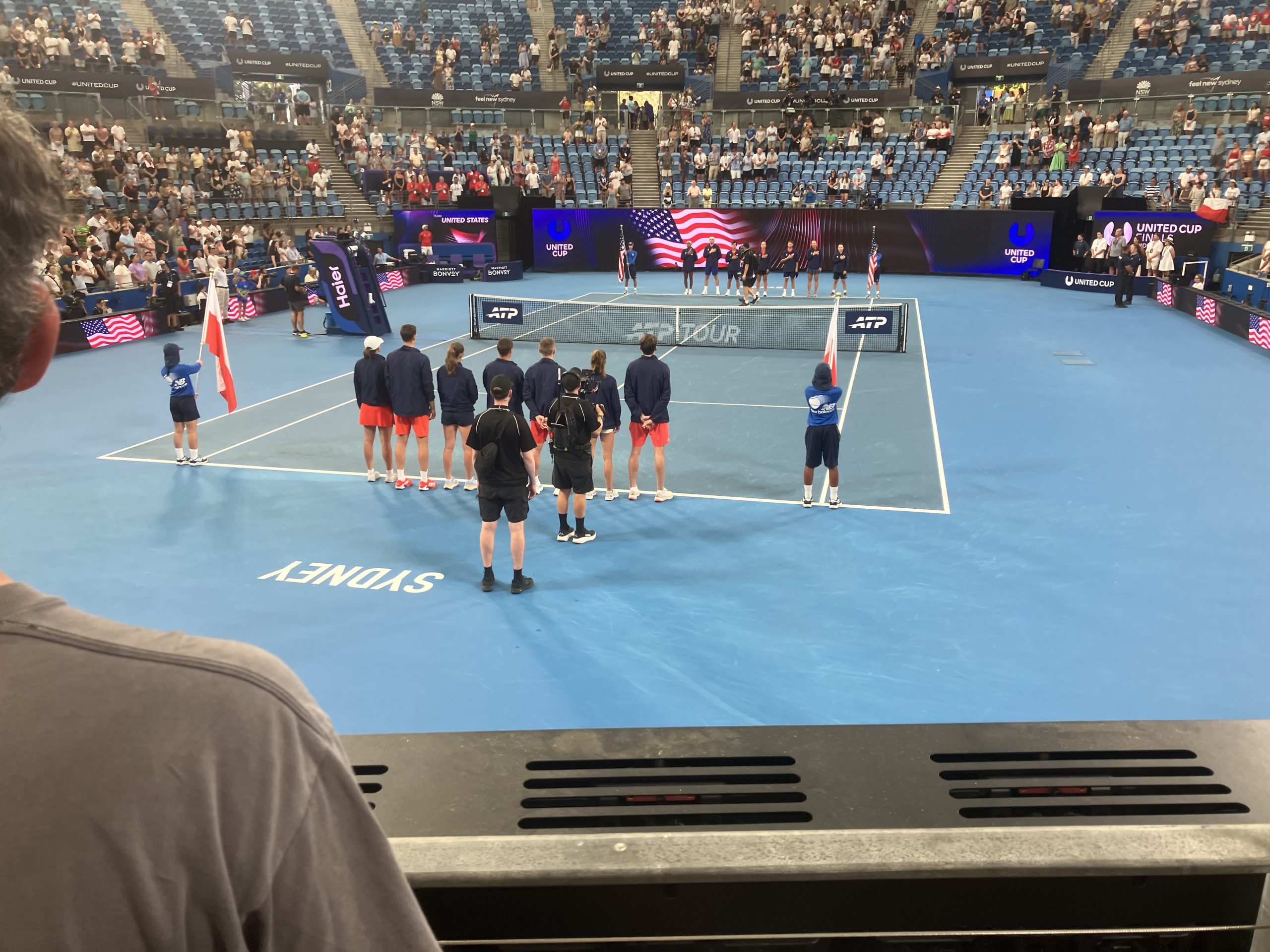
The event is played in Australia, with Perth and Sydney hosting the 2026 edition. Check the specific year’s information for dates, venues and the path between host cities. Do not treat a previous schedule as a guarantee for the following season.
Why mixed doubles is worth watching
The interest lies in how the pair solves problems together. Watch serve placement, the receiver’s target and the net player’s starting position. A serve that produces a manageable return can be more valuable to the partnership than a faster serve that opens an easy angle.
Track the first exchange after the return. Is the returning team immediately defending, or has the return allowed its net player to get involved? This helps explain why positioning and communication matter even when both partners are accomplished singles players.
Compare teamwork rather than reputations
Two famous names make an attractive team sheet, but they still need an effective partnership. Observe who takes the middle ball, how they cover a lob and whether their preferred patterns complement one another. Those visible details are more informative than assuming ranking alone decides mixed doubles.
For recreational players, try borrowing one simple idea from a match: agree the intended serve direction and your partner’s first movement. Practise that pattern at a comfortable pace before attempting ambitious switches during competitive points.
How to follow the event
Use the official schedule and order of play to establish which singles match comes first and when mixed doubles is due. Convert Australian start times to your own time zone carefully, especially when comparing Perth with Sydney.
A team ticket or advertised player list does not guarantee an individual appearance. Confirm the actual line-up when it is announced. The United Cup is best approached as its own mixed-team competition, rather than as a substitute for the separate Davis Cup or Billie Jean King Cup.

