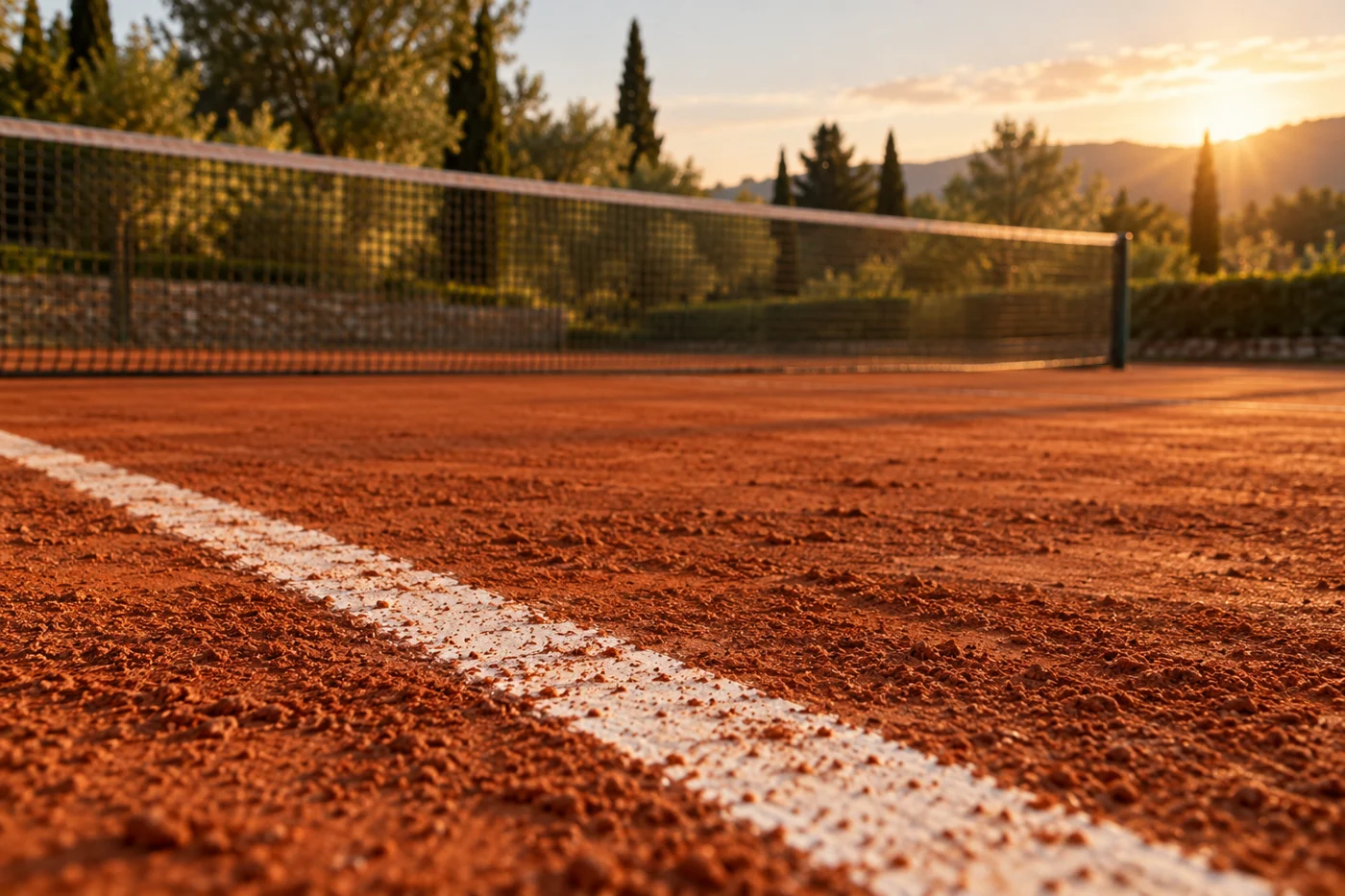
The Madrid Open is a combined ATP Masters 1000 and WTA 1000 event at the Caja Mágica. It belongs to the European clay season, but its identity is not simply another version of Monte-Carlo or Rome. The tournament has changed surface and setting over its history, and Madrid’s elevation adds a useful condition to consider.
From indoor hard court to clay
The modern men’s event began in 2002 as an indoor hard-court tournament. Its move to the Caja Mágica and a combined clay-court format came in 2009. A guide should not describe its entire history as uninterrupted red-clay tennis.
The name Mutua Madrid Open remains associated with the event. Sponsorship labels can change, so separate the core tournament identity from assumptions about whether a title is current or former.
Why location can matter to play
Altitude affects the environment in which the ball travels. Court preparation, temperature and balls still matter, but Madrid can demand different adjustments from a sea-level clay event.
Watch whether players shorten preparation, use more height for margin or alter return position. A label such as “slow clay” is not a complete explanation for every match at the Caja Mágica.
Singles, doubles and a combined programme
The ATP and WTA competitions have separate draws. Their champions earn titles on their respective tours; the venue does not combine the two ranking systems.
An expanded programme can offer several days of early-round matches and outside-court viewing. Check qualifying and main-draw dates separately, and read the exact session access before buying a ticket.
History worth examining
Madrid’s champions have included several styles of player rather than one narrow definition of a clay specialist. The event’s brief blue-clay experiment in 2012 is also a reminder that surface colour and court characteristics are not identical ideas.
For a particular edition’s results, use the official archive. A partial winners list ending years ago is not an adequate replacement for a clearly identified historical example.
Compare the next stop
The transition from Monte-Carlo through Madrid to Rome can change a player’s patterns before Roland-Garros. Compare their positioning across events rather than reading results alone.
For current visiting information, use the organiser’s schedule and venue guidance. Main-court roofs do not imply that every outside court is protected from weather.
