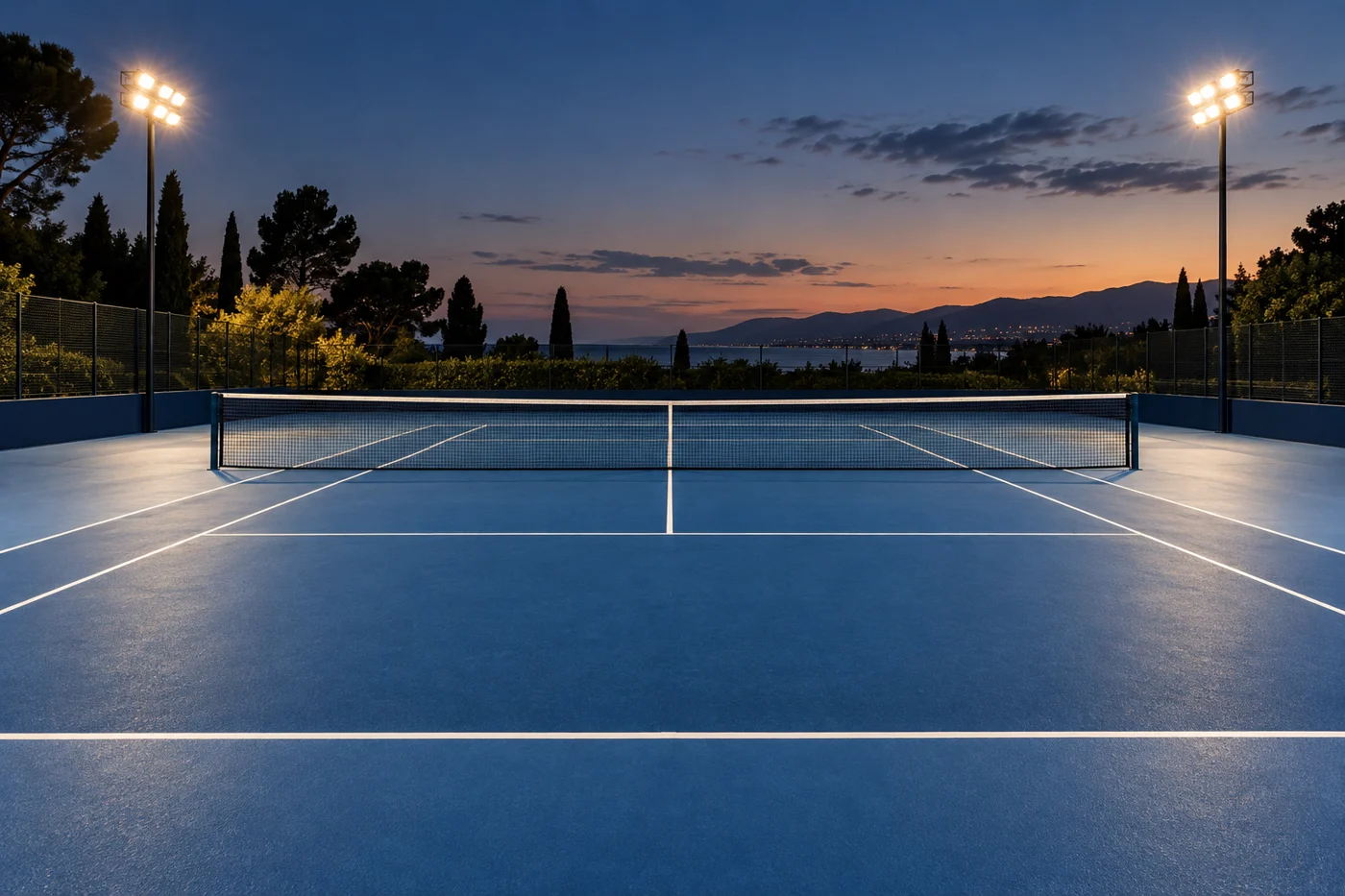
The US Open is the New York major and the last of the four Grand Slam tournaments in the usual annual sequence. Its night sessions and large stadiums are familiar, but the event has also changed venue and surface over its long history. Those changes help explain why old records need context.
From earlier championships to Flushing Meadows
The event traces its history to the US National Championships in 1881. It became the US Open in the professional era of 1968 and moved to its present Flushing Meadows home in 1978.
The US Open was not the first Open Era Grand Slam: Roland-Garros held that distinction earlier in 1968. The shift in eligibility affected the sport as a whole rather than beginning only in New York.
The court surface has changed
Earlier editions used grass and, for a period, clay. The modern tournament uses acrylic hard courts. Laykold became the US Open surface supplier in 2020, so an undated guide should not continue presenting DecoTurf as the current product.
The label “hard court” covers different playing characteristics. Ball, temperature, court preparation and the environment inside a roofed arena all deserve attention when interpreting a match.
Stadiums and sessions
Arthur Ashe Stadium and Louis Armstrong Stadium are major show courts within the USTA Billie Jean King National Tennis Center. The grounds also offer other courts, each with its own atmosphere and access conditions.
Day and night sessions are separate scheduling ideas, not a promise that any particular player will appear. Read the ticket’s court and session entitlement before booking, and use the current order of play rather than an old guide.
What makes a match interesting to watch?
Look at return position and the server’s first ball. A player can create pressure without hitting a winner by repeatedly forcing the opponent to defend from behind the baseline. Changes in rally depth often explain momentum better than winner counts alone.
The crowd and stadium setting can make a night match feel different, but tactical explanations should come from the play rather than a blanket claim that noise benefits one type of player.
Historic champions and a practical starting point
The event’s history includes champions such as Arthur Ashe, Billie Jean King, Chris Evert, Jimmy Connors, Serena Williams and Roger Federer. Specify singles or doubles and the era when comparing their records.
Read Federer’s career guide or women’s tennis legends for player context. The Grand Slam comparison explains how the New York event relates to the other majors.
