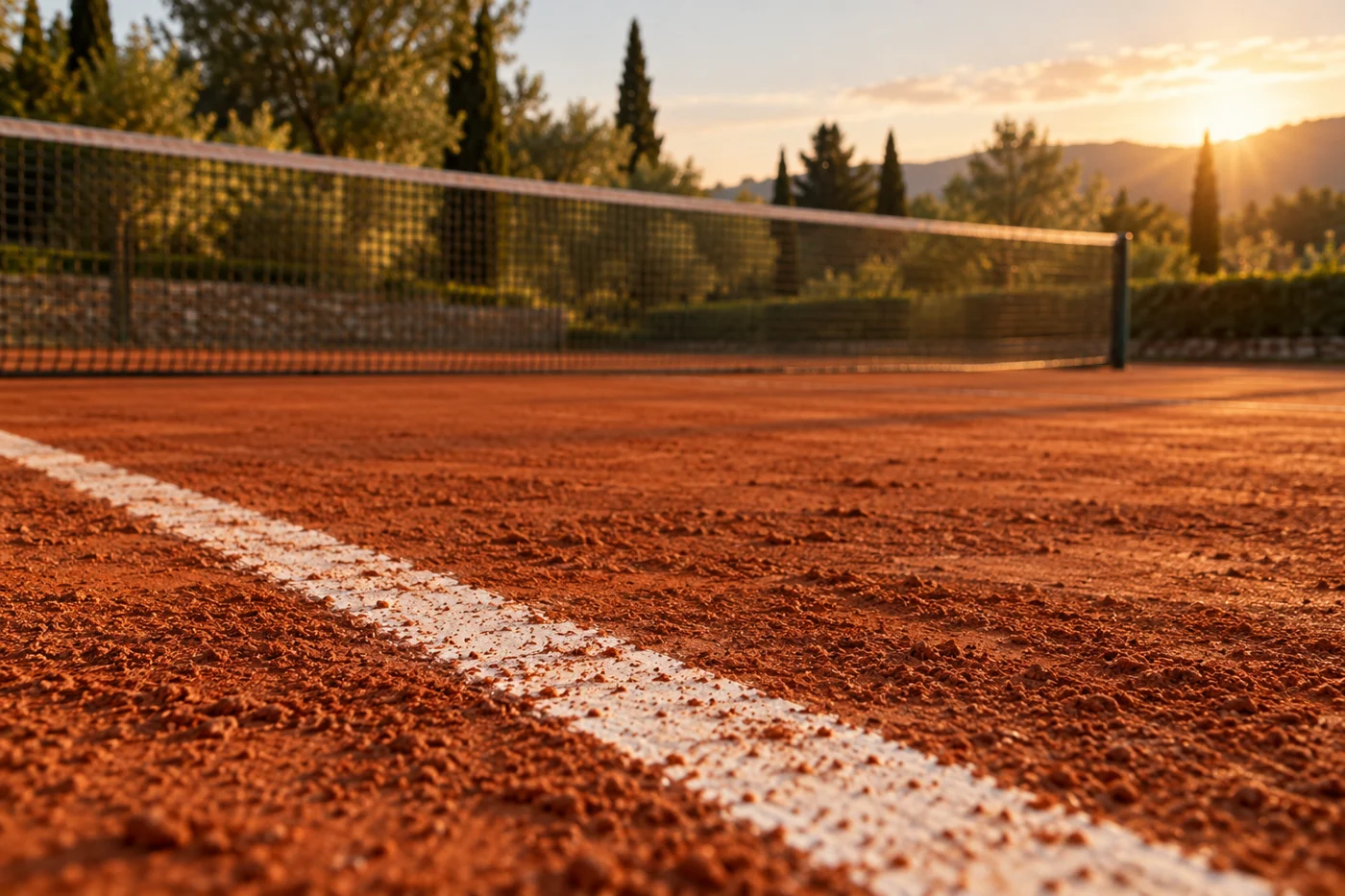
Roland-Garros is the clay-court major, held in Paris. Its surface, long rallies and physical demands give it a distinct place in the calendar. The tournament’s history also helps explain the move from restricted early championships to international competition and then the Open Era.
The tournament and the stadium
The French Championships date to 1891. The move towards a broadly international event and the opening of Stade Roland-Garros in 1928 belong to later stages of its development. The event’s foundation and the stadium’s foundation are not the same date.
The stadium was named for the French aviator Roland Garros. He was not a tennis champion. His aviation story is a separate subject and should not be padded with unverified military detail to lengthen a tennis guide.
The first Open Era major
In 1968 Roland-Garros became the first Grand Slam tournament of the Open Era, with professionals and amateurs competing together. This is a different claim from saying the US Open was the first major to make that transition.
The term “French Open” reflects that professional era, while Roland-Garros remains the event’s widely used identity. Both names refer to the same major.
How clay changes the point
Clay commonly produces a higher bounce and gives players more time than some faster conditions. That encourages patterns involving height, depth and repeated changes of direction. Court conditions and weather still matter, so “clay” is not one identical experience everywhere.
Watch how players recover after being pulled wide. A deep neutral ball can be a successful reset even when it does not look spectacular. Attacking a short ball often requires preparation several shots earlier.
Champions and meaningful comparisons
Rafael Nadal’s 14 singles titles make him central to the event’s history. Chris Evert’s seven women’s singles titles provide another remarkable clay-court record. Their achievements belong to different competitions and eras, so comparison should retain that context.
Iga Świątek’s Roland-Garros wins in 2020, 2022, 2023 and 2024 form a later chapter. Our Świątek profile explains those milestones alongside her results on other surfaces.
Watching or visiting the event
The grounds include show courts and outside courts with different access arrangements. Check the official ticket conditions, daily order of play and weather advice for the edition concerned. A roof on a main arena does not protect the whole site.
For the lead-in events, compare Monte-Carlo, Madrid and Rome. These are tour events rather than additional Grand Slams.
