Halle's TERRA WORTMANN OPEN is a grass-court ATP 500 tournament in Germany. It belongs to the short grass season, when players must adapt quickly after the longer clay swing. That transition gives spectators a useful story to follow beyond the draw: who handles the first low ball, and who can move forward without leaving an easy pass?
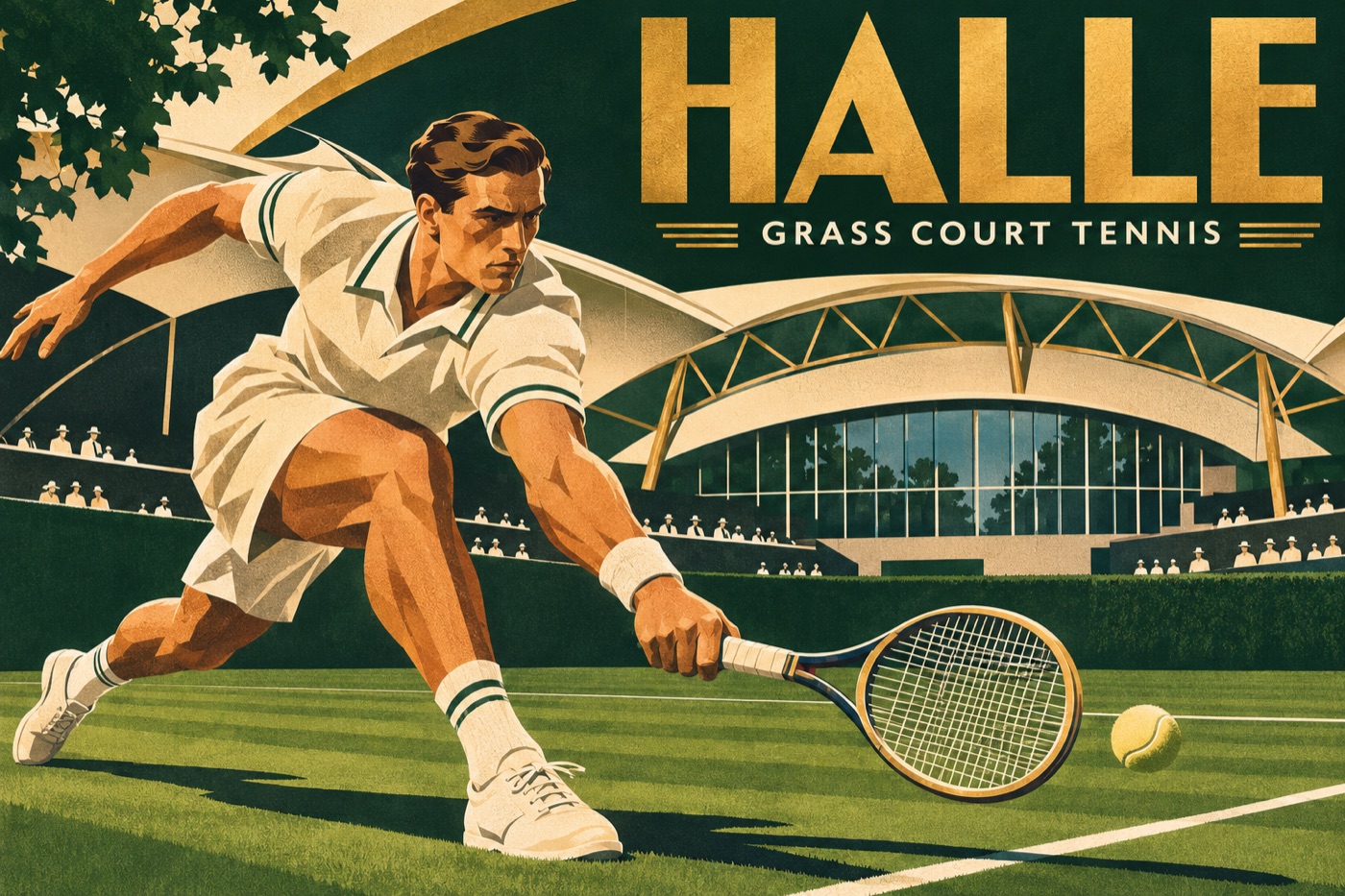
This is an evergreen match-viewing and planning guide. The tournament's current website should be used for edition-specific dates, entrants, prices and court access.
Watch the first uncomfortable contact
A grass match is not explained by serve speed alone. Look for the first ball that makes a player contact below their preferred striking zone or reach without balanced footwork. That contact can decide whether the next exchange is neutral or attacking.
In the opening games, distinguish a player deliberately keeping the ball low from a player merely surviving. A controlled slice that reaches a difficult area and allows recovery has a different purpose from a floating defensive slice. The stroke label is the same; the resulting position is not.
Returns: the useful comparison is within the match
Compare a player's returns of first and second serves. Do they shorten the backswing? Does the return travel low, deep, or directly at an approaching server? A blocked return can be a successful tactical choice even when it does not look forceful.
Then follow what happens after the return. A returner may touch many serves but leave an easy first volley. Another may miss more while making the server play from an awkward position when the ball comes back. Record both survival and the quality of the next situation.
Approaches need a reason
Grass does not make every approach sensible. Note where the attacker contacts the approach, how far the defender must move, and whether the attacker reaches a balanced volley position before the passing shot.
A useful viewing note has three parts: opportunity, approach, first volley. If the pass wins the point, ask which part first created the problem. This avoids blaming the volley for a poor approach or declaring an approach brilliant only because the opponent missed.
A transition checklist for club players
If your own season includes grass, start by checking court-specific footwear and the club's conditions of use. For practice, simplify the session: controlled feeds, an emphasis on moving to the ball, and attention to balanced contact. Do not respond to every low bounce by attempting a low-percentage winner.
For a match-watching exercise, identify three occasions when a player changes direction while moving forward. Ask whether the incoming ball allowed that decision. Professional examples are useful prompts for a conversation with a coach, rather than a ready-made technical prescription.
Planning a day at Halle
Separate the tournament's headline programme from your ticket's actual entitlement. Check the named court, session, seat and access to practice or outside courts. Do not plan a trip around a player appearing in a promotional image: participation and scheduling can change.
Read the official visitor information for transport, parking, bags and accessibility. If you are travelling a long distance, choose arrangements that can cope with a changed order of play. Outdoor grass tennis remains weather-dependent even when a venue has covered facilities; the access and scheduling of different courts still matter.
What makes the event instructive
Halle is a useful place to ask how much a player changes, rather than assuming everyone becomes a serve-and-volley specialist. Watch return preparation, the handling of low contact, approach selection and the first volley. Those four details tell a more complete story than an ace count or a montage of diving winners.
Official reference
Related reading
- Rotterdam Tennis Guide: Reading Indoor Matches at the ABN AMRO Open
- Barcelona Open Guide: Clay-Court Patterns Beyond the Highlight Reel
- Queen's Club Tennis Guide: Two Grass-Court Events and What to Watch
- Vienna Tennis Guide: Indoor Patterns at the Erste Bank Open
- The four Grand Slam tournaments
- ATP Masters 1000 explained
