Two string beds can look worn in different ways. One develops visible grooves at the intersections; another shows small fibres separating at the surface. Those observations are commonly described as notching and fraying. They are useful descriptions of appearance, not complete diagnoses of performance or remaining life.
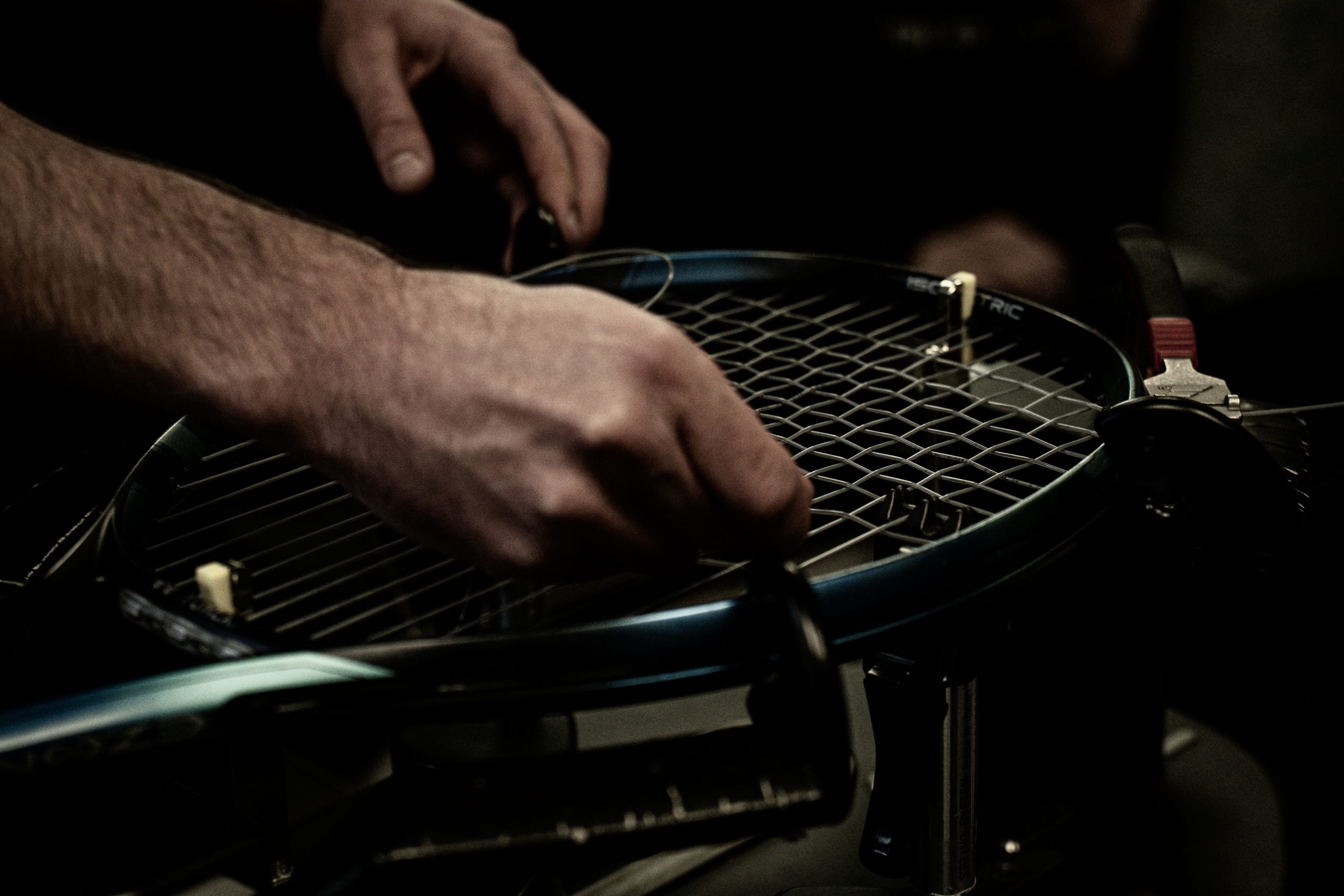
The best next step is often a clear photograph and a short history for the stringer. Guessing the material from a fuzzy close-up or insisting on an exact number of hours left can turn a useful inspection into false precision.
Begin with what is actually installed
Find the installation receipt or stringing log. Record the string's full name, gauge, date and whether the racket uses the same string throughout or a hybrid. Colour alone is not a reliable way to identify construction.
Material matters when interpreting appearance. A multifilament contains many fine filaments, while a monofilament has a different construction. A rough-looking surface therefore should not be assumed to mean the same thing in every string. If the material is unknown, say so rather than guessing.
Photograph the intersection and the whole bed
Take one picture of the complete racket face and another close-up of the concern in good light. Include the surrounding crossings so the stringer can locate it. Avoid a dramatic filter or excessive sharpening that hides the actual surface.
If there is a break, photograph it before the racket is restrung. Note whether it is near the central hitting area or close to the frame. Keep the description neutral: “break near the upper grommet” is more useful than declaring a faulty installation without inspection.
Look at the frame-side details too
Strings pass through grommets that help separate them from the frame. A visibly damaged or missing section deserves attention from a technician. Do not poke a sharp tool into the grommet or pull hard on a damaged string to investigate.
Surface wear is only one part of the picture. Contact location, installation, frame condition and use can all matter. A photograph documents a condition; it rarely establishes the complete cause by itself.
Separate wear from feel
A string bed may look tidy while its response has changed. Another may show surface wear while the player has not noticed a problem. Record both appearance and the tennis observation rather than assuming one always predicts the other.
For example, write “visible wear in the centre; response still predictable during a controlled rally” or “little visible change; return height less predictable over two sessions”. Those are observations to discuss, not guarantees that continued play is safe or that the strings caused an issue.
Useful questions for the appointment
Ask whether the stringer sees damage needing attention before another installation. Ask whether the break location suggests inspecting the grommets. If wear repeatedly appears quickly, discuss whether a different material or gauge is worth a controlled trial.
Avoid changing several variables at once. Keep the original configuration in the log and specify what the next installation is intended to investigate. A more expensive string is not automatically the answer to wear, and longer break resistance is not the same as longer satisfactory playing life.
What an inspection cannot tell you
There is no dependable visual countdown to a break. Nor can a string photograph diagnose arm pain. Stop playing if symptoms occur and seek appropriate assessment. Use the equipment record to make the conversation more precise, while leaving medical conclusions and physical inspection to the relevant professionals.
Construction reference
Related reading
- Why Polyester Tennis Strings Can Feel Dead Before They Break
- Round vs Shaped Polyester Tennis Strings: Spin Is More Than an Edge
- A Tennis Stringing Log You Will Actually Use: What to Record and Why
- Tennis String Savers Explained: A Small Accessory, Not a Fresh String Bed
- String materials compared
- String gauge explained
