The Erste Bank Open brings ATP 500 indoor hard-court tennis to Vienna. For a spectator, its appeal includes the chance to follow a match without wind complicating the ball's flight. That clearer environment is useful for watching patterns, but it does not make the contest tactically simple.
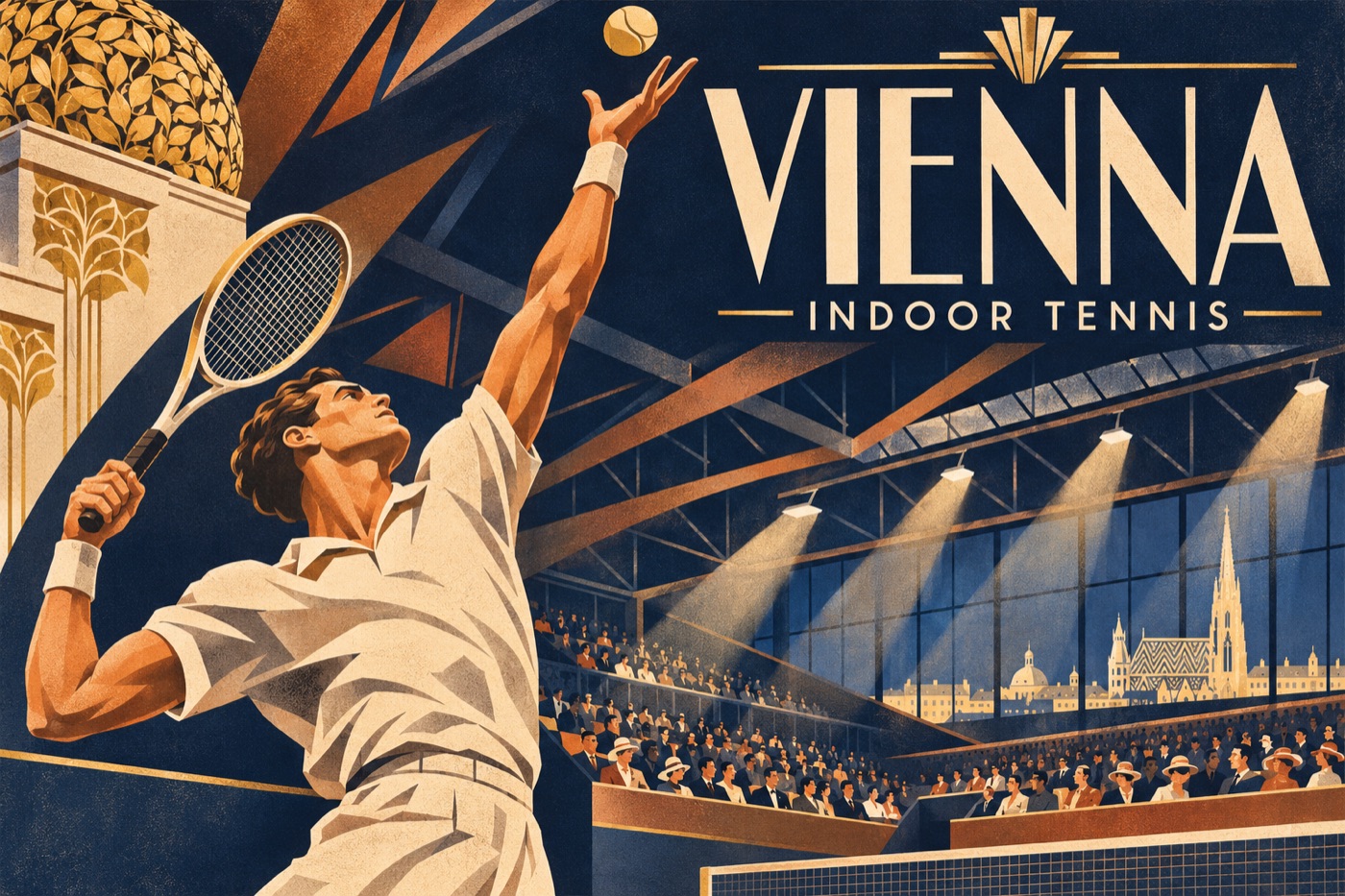
The tournament's official programme distinguishes the Wiener Stadthalle from activities and tennis scheduled at Marx Halle. Before planning a visit, establish which venue and session your ticket actually covers. A city-wide event programme does not imply interchangeable admission.
Serve plus one is a sequence, not a slogan
The first shot after a serve is often discussed as if it were automatically an attacking forehand. In practice, its quality depends on the return. Watch where the server makes contact and whether the player has time to choose direction.
A wide serve may create open space, but it can also create a sharp return angle. A body serve may produce a shorter reply without opening the court as much. Write down both the serve direction and the available next ball before deciding which option is working.
Return depth changes the picture
A return can be successful without travelling fast. A deep ball that prevents the server from stepping inside the court may be more useful than a harder ball landing short. Conversely, depth is not the only objective when the server approaches the net: return height becomes important too.
For one return game, follow contact position, return landing area and the server's next contact. If the returner loses the game, that record can still show a useful adjustment rather than a complete tactical failure. A small number of points can decide a game after several good decisions.
Read the rally before reading the scoreline
An indoor match can contain a close score and uneven rally control. Note whether one player repeatedly gives up the baseline or whether both maintain similar positions. Then distinguish an error made from balance from an error under pressure.
This is an editorial viewing framework, not a statistical model. Without consistent point-by-point coding, avoid turning a handful of observations into a numerical prediction. Its value is in making the next exchange easier to understand.
A useful doubles detour
If your ticket and the order of play allow it, doubles provides another view of serving patterns. Watch the returner's target relative to the opposing net player. Notice how the server's partner moves before the return and whether that movement changes the receiver's choice.
For club players, the practical takeaway may be communication rather than raw speed. Discuss a serve direction and a first movement with your partner before the point. The professional match offers examples to think about, not a requirement to copy an elite poach at the same pace.
Plan the venue as carefully as the tennis
Use the official event information and FAQ for entry, accessibility, bag rules and transport. Check the ticket's venue, date and session instead of assuming all listed activities are in the same building. The current order of play is the reference for match scheduling once published.
Do not rely on an old prize-money table or a previous edition's entry list when planning the next tournament. This guide intentionally avoids presenting a completed edition as upcoming. Travel and accommodation decisions should allow for withdrawals, changing match times and the actual ticket terms.
What to watch in the final set
When a match becomes tight, return to the same three observations: serve direction, return depth and the first balanced contact. Has a player changed the pattern, or simply executed the same plan better? That distinction produces a more useful account of Vienna's indoor tennis than attributing every close point to momentum.
Official references
- Erste Bank Open: event information
- Erste Bank Open: frequently asked questions
- Erste Bank Open: current programme
Related reading
- Rotterdam Tennis Guide: Reading Indoor Matches at the ABN AMRO Open
- Barcelona Open Guide: Clay-Court Patterns Beyond the Highlight Reel
- Halle Tennis Guide: How to Watch the Change from Clay to Grass
- Queen's Club Tennis Guide: Two Grass-Court Events and What to Watch
- The four Grand Slam tournaments
- ATP Masters 1000 explained
