String savers are small inserts placed at selected crossings in a tennis string bed. They are intended to reduce rubbing between strings at those contact points. Babolat's Elastocross is one established commercial example; the general idea is an accessory at an intersection, not a coating applied to the entire racket.
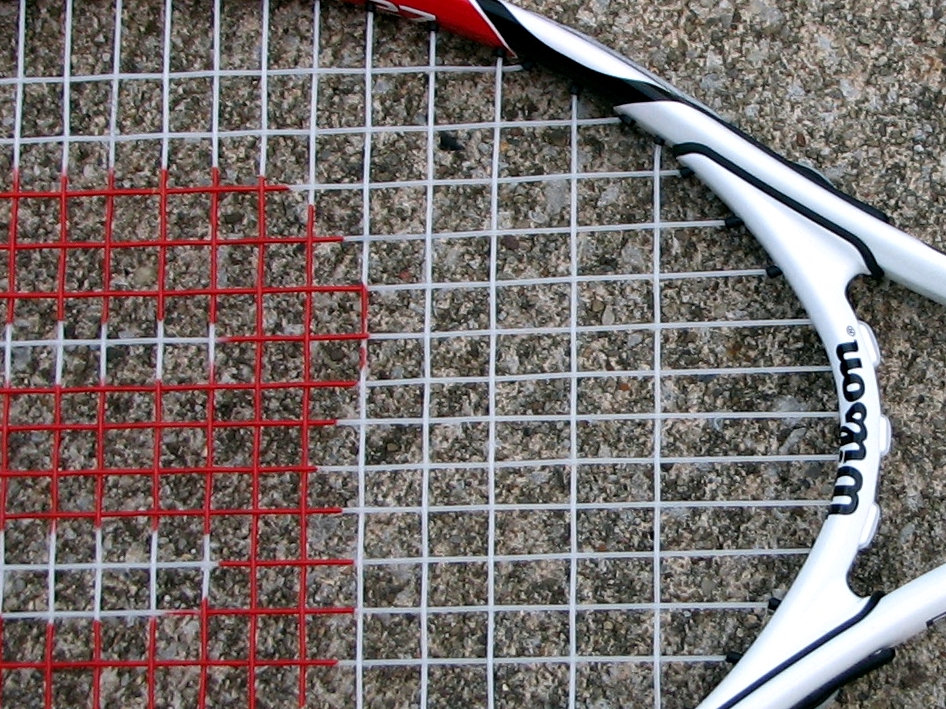
They are sometimes discussed as if they can make any string setup last indefinitely. A better question is narrower: is local wear at intersections the problem you are trying to address, and does this accessory make sense for the particular installation?
Start with the reason for using them
If your concern is repeated visible wear in the central hitting area, ask a stringer to inspect it. If the concern is an unpredictable response after many hours, inserts will not install a new string bed or undo its history. Identifying the problem prevents an accessory purchase from replacing a needed restring.
Do not assume a player's professional racket photograph proves that you need the same arrangement. A personal setup reflects that player's material, maintenance and preferences. It does not establish the best choice for another player's racket.
Placement is part of the setup
Discuss the product instructions and intended locations with a competent stringer. Record the number and placement if you want to compare the result. An undocumented scattering of inserts makes it difficult to identify what changed between sessions.
Avoid forcing an accessory into damaged strings or using improvised hard objects instead. A commercial product should be used according to its instructions. If you are unsure whether the installed strings or grommets are sound, have them inspected first.
Compare response as well as appearance
After a planned change, revisit a familiar rally task. Note trajectory, feel and whether the accessory stays in its intended position. Do not assume that a change in appearance proves a measured increase in useful life.
Keep the comparison modest. If new strings, a different tension and savers were all introduced together, the session tests the combined setup. You cannot attribute every good shot to the inserts alone. The same limitation applies if the comparison is between a worn bed and a completely fresh one.
Think in complete costs
An accessory can add purchase cost and installation effort. Evaluate that against the kind of wear you actually experience and the time you are willing to spend maintaining the racket. A claim that an item “saves money” needs a real personal comparison, not just the possibility of a later break.
Record why the string bed is eventually replaced. If response becomes unacceptable before breakage, increasing break resistance may not change the useful replacement point. That distinction is particularly important when comparing different string materials.
Ask about competition rules when relevant
If you play organised competition, consult the applicable current equipment rules or the event referee for questions about permitted devices. Do not use a general web article as an equipment ruling for a particular competition. A normal retail accessory and an improvised modification should not be treated as equivalent without checking.
A sensible decision
Consider string savers as a targeted accessory to discuss with your stringer. Keep a record, inspect the setup and judge the actual response. They are neither a cure for discomfort nor a way to restore damaged strings. If local intersection wear is not the issue, another maintenance decision may be more relevant.
Manufacturer reference
Related reading
- Why Polyester Tennis Strings Can Feel Dead Before They Break
- Round vs Shaped Polyester Tennis Strings: Spin Is More Than an Edge
- A Tennis Stringing Log You Will Actually Use: What to Record and Why
- Tennis String Notching vs Fraying: What to Photograph for Your Stringer
- String materials compared
- String gauge explained

